
CONSTITUTIONAL CONCERNS: THE CONTROVERSY OF LEGISLATIVE CONSTITUENCY ALLOWANCES IN NIGERIA
By Ijose Ayodeji. ijoseayodeji@gmail.com · October 7, 2026
1. INTRODUCTION
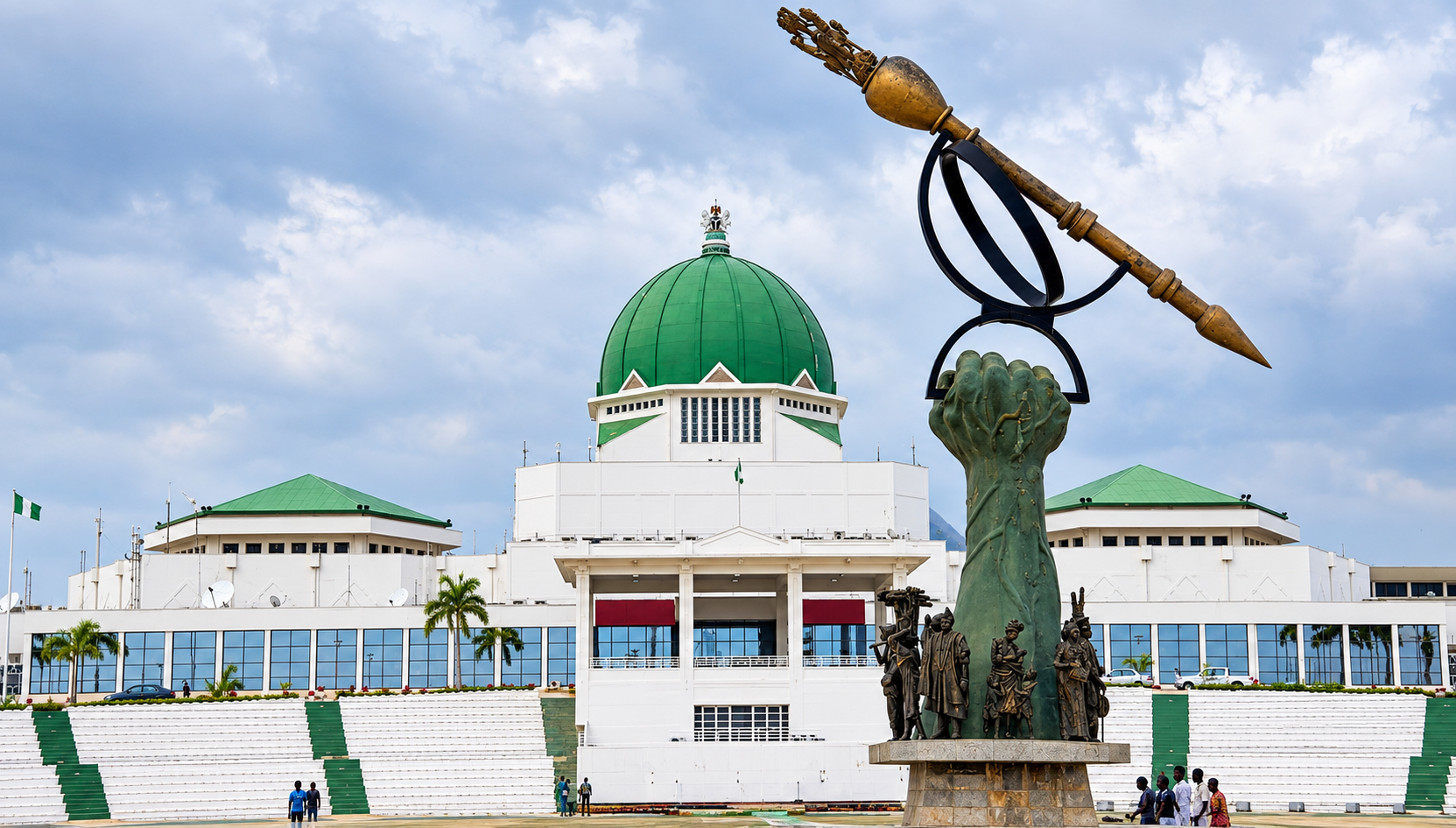
The Nigerian democratic experiment has been marked by numerous controversies, but few have generated as much heated debate as the issue of constituency allowances paid to federal lawmakers. At the heart of this controversy lies a fundamental constitutional question: are legislators overstepping their constitutional mandate by receiving billions in constituency allowances for developmental projects that traditionally fall under executive responsibility?
2. CONSTITUTIONAL FRAMEWORK AND LEGISLATIVE POWERS
The 1999 Constitution of Nigeria, as amended in 2023, provides clear demarcation of powers among the three arms of government. Section 4(1) explicitly states that "The legislative powers of the Federal Republic of Nigeria shall be vested in a National Assembly for the Federation, which shall consist of a Senate and a House of Representatives." Furthermore, Section 4(2) empowers the National Assembly to "make laws for the peace, order and good government of the Federation with respect to any matter included in the Exclusive Legislative List."
The constitution establishes the legislature's primary function as lawmaking, with Sections 58-59 outlining the detailed process for bill passage and Section 9 providing mechanisms for constitutional amendment. These provisions collectively establish that the core responsibility of legislators is to craft, debate, and pass laws—not to execute developmental projects.
3. THE EXECUTIVE MANDATE
The constitution establishes a clear hierarchy of executive authority designed to handle developmental projects and service delivery. At the federal level, the President serves as the chief executive, while governors manage state affairs and local government chairmen oversee grassroots development. This three-tier system was deliberately crafted to ensure efficient service delivery and clear accountability lines from the federal level down to the local communities.
When lawmakers venture into project execution, they essentially usurp executive functions, creating confusion in the democratic process and blurring the lines of accountability that the constitution sought to establish.
4. THE CONSTITUENCY ALLOWANCE CONTROVERSY
The constituency project system, which has a yearly budget of N100 billion, was established during the Obasanjo administration with the hope of bringing government closer to the people. However, this well-intentioned initiative has evolved into what many consider a constitutional aberration and a drain on national resources.
Current revelations about the scale of these allowances are staggering. Investigative reports revealed that senators receive ₦2 billion annually in constituency allowances, while members of the House of Representatives pocket ₦1 billion each. Recent disclosures indicate that "nobody gets less than N1 billion. And no senator operates with less than N2 billion."
To put this in perspective, while each Nigerian Senator earns ₦162 million ($450,000) annually in allowances, and ₦9 million ($25,000) as basic salary, the American President, for instance, only earns $450,000 (including bonus) annually.
5. THE POOR TRACK RECORD
The most damning aspect of the constituency allowance system is its poor performance record. Yet, across the country, most constituencies show little to no trace of impactful projects. Despite the massive budget allocation, the track record has been "one problem after the other every year."
Many lawmakers fail to execute any meaningful projects throughout their four-year tenure. Some resort to tokenistic gestures like distributing rice, providing wheelbarrows, or other items that hardly justify the billions allocated to them. This represents a colossal waste of public resources that could be better utilized through the proper executive channels.
6. CONSTITUTIONAL VIOLATIONS AND FISCAL CONCERNS
Moves by the Senate to legalise constituency projects last year and to increase the vote from N100 billion yearly were jettisoned on the grounds that such venture will interfere with the provisions of Section 80 of the 1999 Constitution as Amended which vest the power of appropriations in the executive.
This constitutional conflict highlights the fundamental problem with the current system. Section 80 of the constitution clearly vests appropriation powers in the executive arm, making legislative involvement in project execution constitutionally questionable.
The "constituency allowance" has often been criticised for lack of transparency and accountability, with little to show for the huge sums allocated. This lack of accountability undermines democratic principles and erodes public trust in democratic institutions.
7. THE CASE FOR CONSTITUTIONAL COMPLIANCE
The argument for restricting legislators to their constitutional mandate is both legal and practical. Constitutionally, the separation of powers doctrine demands that each arm of government operates within its designated sphere. When lawmakers receive constituency allowances for developmental projects, they violate this fundamental principle.
From a practical standpoint, the current system creates several problems which are:
a. Duplication of Functions: Both executives and legislators end up working on similar projects, leading to inefficiency and waste.
b. Accountability Gaps: Citizens struggle to determine who is responsible for project failures when both executives and legislators are involved.
c. Resource Misallocation: Billions that could fund large-scale, coordinated development programs are instead scattered across hundreds of individual lawmakers with varying levels of competence and commitment.
d. Democratic Deficit: The system reduces legislators to project contractors rather than the democratic representatives and lawmaking experts they should be.
8. THE WAY FORWARD
Nigeria's democracy would be better served by returning to constitutional orthodoxy. Legislators should focus exclusively on their primary mandate of lawmaking, constitutional oversight of the executive, and representing their constituents' interests in the legislative process.
The billions currently allocated as constituency allowances should be redirected to the appropriate executive agencies, federal ministries, state governments, and local government areas, which have the constitutional mandate, technical expertise, and administrative machinery to execute developmental projects effectively.
Legislators can still serve their constituencies meaningfully by:
- Ensuring adequate budgetary allocations for their constituencies through the normal appropriation process
- Exercising vigorous oversight to ensure executives deliver on their promises
- Facilitating dialogue between their constituents and relevant government agencies
- Proposing legislation that addresses their constituencies' needs
CONCLUSION
The constituency allowance system represents a fundamental deviation from constitutional principles and democratic best practices. It transforms lawmakers from legislators into contractors, blurs constitutional boundaries, and wastes enormous public resources with little to show for it.
Nigeria's democratic maturation requires a return to constitutional compliance where legislators focus on lawmaking while leaving project execution to the constitutionally mandated executive arms of government. Only through such disciplined adherence to constitutional roles can Nigeria build the transparent, accountable, and effective governance system its citizens deserve.
The time has come to end what many rightfully consider "the biggest fraud in Nigerian democracy" and restore constitutional order to the country's democratic process. The poor deserve better than a system that enriches lawmakers at their expense while delivering minimal developmental impact.
REFERENCES:
1. Constitution of the Federal Republic of Nigeria, 1999 (as amended)
2. "Nigeria: Even with N100b budget for constituency projects..." Worldstage News, September 2025
3. "Unending controversies surround lawmakers' jumbo pay," Punch Newspaper, August 2024
4. "Nigerian Lawmakers are Eating the Country's Wealth with Insane Allowances," African Liberty, May 2019
5. "Constituency Project Stink: How lawmakers pad budgets, make billions," Vanguard News, March 2024
6. "Nigeria's Security Votes And Jumbo Allowances: A Nation Held Hostage," The Nigerian Voice, August 2025
7. "ANALYSIS: How Nigerian lawmakers share N100 billion zonal intervention fund annually," Premium Times, April 2018